Oppenheimer Blue Diamond: The World’s Most Valuable Blue Diamond Per Carat
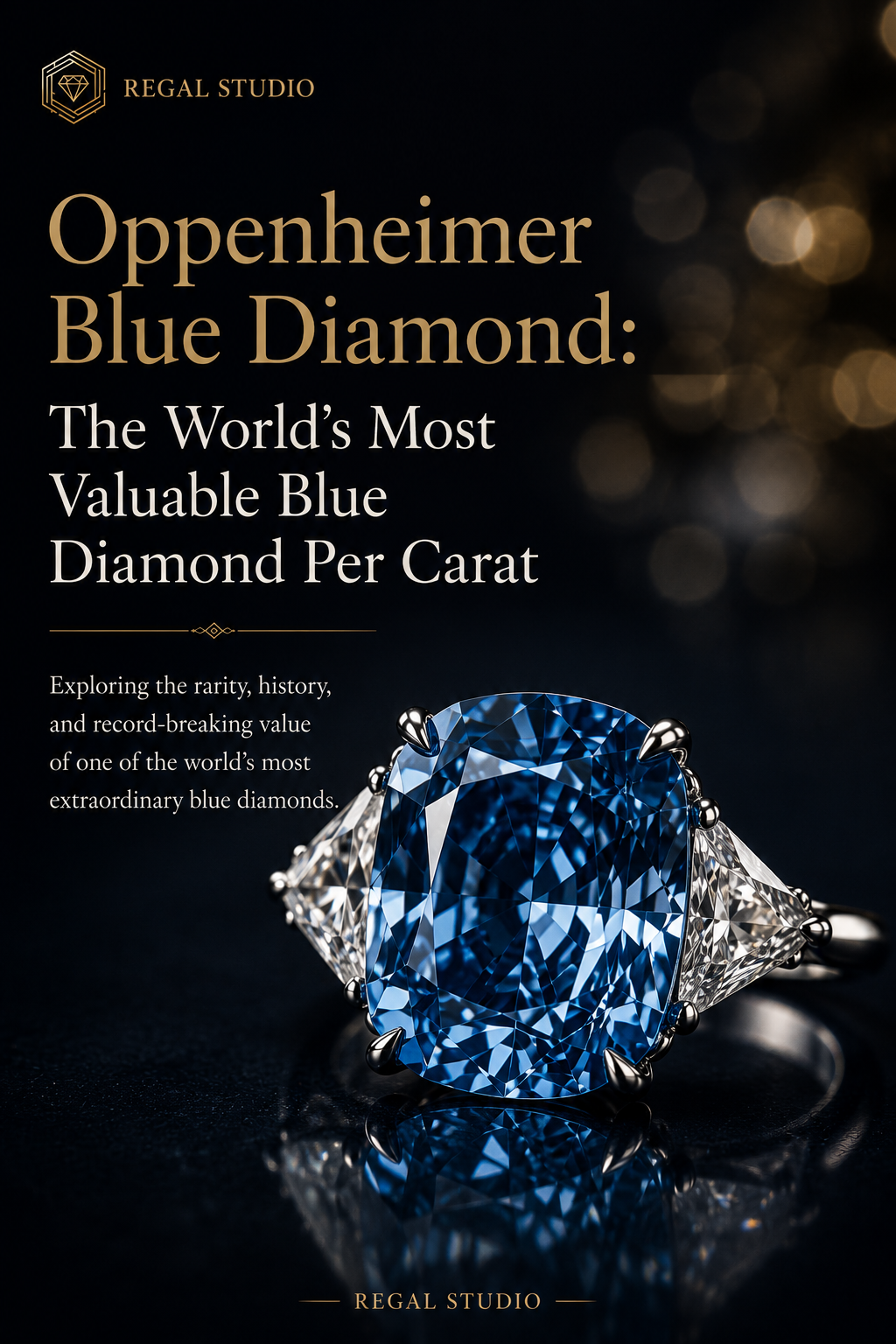
The Oppenheimer Blue diamond sold for $57,541,779 at Christie’s Geneva on May 18, 2016, setting a new world record as the most expensive jewel ever sold at auction at the time. The 14.62-carat Fancy Vivid Blue rectangular-cut diamond, mounted in its original Verdura “Eight Blades” platinum setting flanked by trapeze-shaped diamonds, was named after its former owner, Sir Philip Oppenheimer, the late chairman of the De Beers Diamond Syndicate. The sale marked approximately $3.93 million per carat, the highest per-carat price ever paid for any diamond at auction at that time. As the largest and finest Fancy Vivid Blue diamond ever offered at public auction, the Oppenheimer Blue holds a permanent place among the most legendary colored diamonds in modern history.
In our market observations across more than four decades of diamond grading and the high-end colored stone market, the Oppenheimer Blue diamond is one of the three most influential blue diamond transactions in modern auction history, alongside the Blue Moon of Josephine and the De Beers Cullinan Blue. Experience has shown that understanding this single sale teaches more about the economics of investment-grade blue diamonds than any other auction in the past two decades.
The Oppenheimer Blue Diamond at a Glance
Before exploring the full story, here are the essential facts every collector should know.
Attribute | Detail |
Carat weight | 14.62 carats |
GIA color grade | Fancy Vivid Blue |
Clarity grade | VVS1 (Very Very Slightly Included 1) |
Cut | Rectangular (modified emerald cut) |
Diamond type | Type IIb (boron-induced blue) |
Auction date | May 18, 2016 |
Auction house | Christie’s Geneva |
Final hammer price | $57,541,779 USD |
Per-carat price | Approximately $3.93 million per carat |
Pre-auction estimate | $38-45 million |
Bidding duration | Approximately 25 minutes |
Buyer | Anonymous private collector (still owns) |
Setting | Original Verdura “Eight Blades” platinum |
Side stones | Two trapeze-shaped diamonds |
Ring size | 6 |
Previous owner | Sir Philip Oppenheimer (De Beers chairman) |
Status at sale | Largest and finest Fancy Vivid Blue ever auctioned |
A key insight often overlooked: the Oppenheimer Blue’s $3.93 million per-carat price was the world record for any diamond ever sold at auction at that time, surpassing the Blue Moon of Josephine’s record set just six months earlier. This per-carat figure stood as a benchmark for years.
Why the Oppenheimer Blue Diamond Sold for $57.5 Million
The Oppenheimer Blue’s price was not arbitrary. It reflected six interlocking factors that combined to make this stone genuinely exceptional.
The six factors driving the Oppenheimer Blue price:
- Carat weight: at 14.62 carats, the largest Fancy Vivid Blue ever offered at public auction
- Color grade: Fancy Vivid Blue, the highest possible blue intensity
- Clarity grade: VVS1, exceptional clarity at this size
- Diamond type: Type IIb, less than 0.1% of all diamonds
- Provenance: Sir Philip Oppenheimer ownership, the De Beers connection
- Original setting: untouched Verdura “Eight Blades” platinum mounting
Experience has shown that no single factor alone justified the $57.5 million price. The combination of all six in one stone is what made the Oppenheimer Blue record-breaking.
The Sir Philip Oppenheimer Connection
The Oppenheimer Blue’s name and prestige come directly from one of the most influential figures in 20th century diamond history.
Who Sir Philip Oppenheimer Was
Sir Philip Oppenheimer (1911-1995) was a member of the Oppenheimer family that controlled De Beers diamond company for nearly a century. He began working in the family business at De Beers London in 1934, sorting and valuing diamonds at the entry level.
Over a 45-year career, Sir Philip rose to:
- Chairman of the London-based Central Selling Organisation for over 45 years
- Head of the Diamond Trading Company branch
- Leader of the Diamond Syndicate that controlled global diamond supply
- One of the most respected diamond connoisseurs of the 20th century
The Diamond Syndicate’s role in the global diamond trade gave Sir Philip unparalleled access to the world’s most exceptional diamonds throughout his career. He could have selected almost any stone for his personal collection.
Why He Kept This Particular Diamond
In our market observations, the fact that Sir Philip Oppenheimer chose to keep this specific diamond from the entire universe of stones available to him is itself one of the most important provenance signals in modern diamond history.
When the world’s most knowledgeable diamond expert keeps a stone for himself instead of selling it, that decision speaks louder than any GIA grade. The Oppenheimer Blue’s $57.5 million price reflects, in part, the validation of an expert who had seen everything and chose this stone specifically.
A key insight often overlooked: the diamond carried Sir Philip’s name not just because he owned it, but because the market understood that his ownership was itself a form of authentication. The Oppenheimer name became the diamond’s permanent identity.
The Auction: May 18, 2016 at Christie’s Geneva
The Oppenheimer Blue’s sale at Christie’s Geneva on May 18, 2016, was one of the most consequential single-jewel auctions in modern history.
Pre-Auction Expectations
Christie’s specialists estimated the diamond would sell between $38 million and $45 million. Industry expectations were already aggressive. The Blue Moon of Josephine had sold for $48.4 million just six months earlier, setting a previous world record.
The 25-Minute Bidding Battle
Bidding opened around 30 million Swiss francs (approximately $30.4 million) and climbed steadily. Two serious bidders engaged in an intense battle that stretched for approximately 25 minutes.
The bidding pattern revealed the stakes:
- Initial increments of millions of dollars
- Mid-bidding increments of $500,000
- Final increments dropped to $200,000 as the bidders pushed each other to absolute limits
When the gavel finally fell at $57,541,779 to a phone bidder, the auction room erupted in applause. The new world record was set.
Records Established
The Oppenheimer Blue established multiple auction records on May 18, 2016:
- Most expensive jewel ever sold at auction (until the Pink Star in 2017)
- Highest per-carat price for any diamond ever at $3.93 million per carat
- Largest Fancy Vivid Blue diamond ever sold at public auction
- Highest single-stone sale at Christie’s at that point in history
The auction generated approximately 40% of Christie’s total $145 million sales day, demonstrating how a single exceptional stone can dominate even a major jewelry auction.
In our market observations, the Oppenheimer Blue’s records signaled that the new tier of fancy color diamond pricing established by the Blue Moon was permanent. This was no
The Verdura “Eight Blades” Setting
One distinctive aspect of the Oppenheimer Blue is its original setting, which significantly contributed to the stone’s auction value.
About Verdura
Verdura is one of the most prestigious American jewelry houses, founded in 1939 by Sicilian Duke Fulco di Verdura. The firm has been responsible for some of the most distinctive jewelry designs of the 20th century, working with clients including the Duchess of Windsor, Coco Chanel, and major Hollywood stars.
The “Eight Blades” Mounting
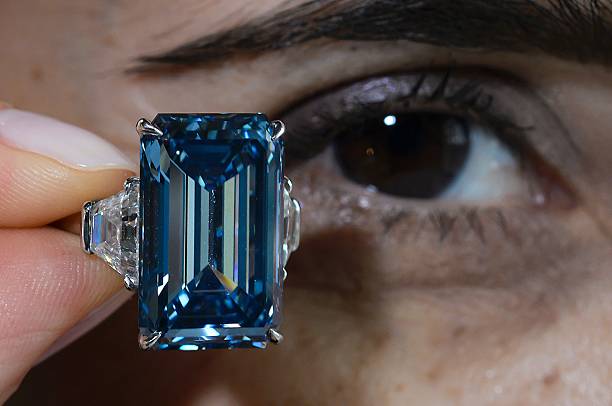
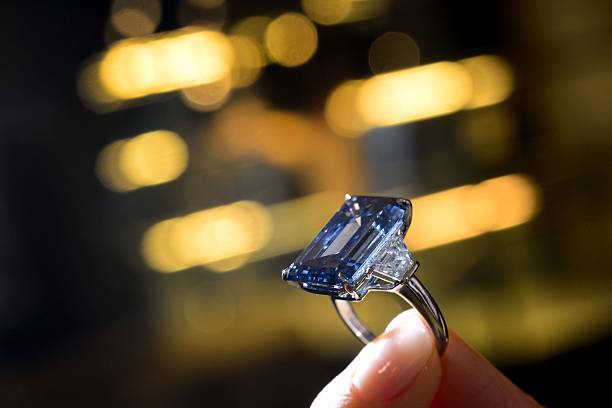
The Oppenheimer Blue’s mounting features:
- The 14.62-carat blue diamond as the central stone
- Two trapeze-shaped white diamonds flanking the center
- A platinum band
- Distinctive geometric “Eight Blades” prong pattern unique to Verdura
- Ring size 6 fit
The fact that the stone retained its original Verdura mounting from Sir Philip Oppenheimer’s possession added significant value. Original period mountings are increasingly rare in the colored diamond market, where most historic stones have been reset multiple times.
A key insight often overlooked: the auction price of $57.5 million was for the complete piece, including the historic Verdura mounting. Had the diamond been removed from the original setting, the loss of historical context might have reduced the stone’s auction value by millions of dollars.
The Type IIb Chemistry: Why Boron Matters
The Oppenheimer Blue is classified as a Type IIb diamond, which is part of why it commanded such an extraordinary price.
What Type IIb Means
Type IIb diamonds are the chemically distinct category of diamonds that contain boron atoms substituted for some carbon atoms in the crystal structure. The boron content is what creates natural blue color in diamonds.
Key facts about Type IIb diamonds:
- Less than 0.1% of all natural diamonds qualify as Type IIb
- Boron content makes Type IIb diamonds electrically conductive (most diamonds are not)
- All major fancy blue diamonds (Hope, Oppenheimer, Cullinan Dream, Blue Moon) are Type IIb
- The blue color saturation is directly proportional to boron concentration
- Boron substitution occurs only in extremely specific geological conditions
For the Oppenheimer Blue to combine Type IIb chemistry with Fancy Vivid Blue color, VVS1 clarity, and 14.62-carat size makes it statistically extraordinary. According to Christie’s, blue diamonds comprise only around 0.0001% of the world’s diamonds, and only about 1% of those are classified as Fancy Vivid.
The Oppenheimer Blue therefore represents the rarest fraction of an already vanishingly rare category. As CNN noted at the time of sale, blue diamonds are “second in rarity only to red diamonds” among all colored diamond categories.
The Oppenheimer Blue in Context: Most Expensive Blue Diamonds
To fully appreciate the Oppenheimer Blue’s significance, see how it ranks among the world’s most valuable blue diamonds.
Diamond | Carats | Year Sold | Price | Per Carat |
Hope Diamond | 45.52 | Smithsonian | Est. $250M | N/A (not for sale) |
Oppenheimer Blue | 14.62 | 2016 | $57.5M | $3.93M |
De Beers Cullinan Blue | 15.10 | 2022 | $57.5M | $3.81M |
Blue Moon of Josephine | 12.03 | 2015 | $48.4M | $4.03M |
Mellon Blue (Zoe Diamond) | 9.75 | 2014 | $32.6M | $3.34M |
Cullinan Dream | 24.18 | 2016 | $25.4M | $1.05M |
Winston Blue | 13.22 | 2014 | $23.8M | $1.80M |
Heart of Eternity | 27.64 | Estimate | $16M | N/A |
In our market observations, the Oppenheimer Blue and De Beers Cullinan Blue both sold for $57.5 million, but the Oppenheimer’s smaller size at 14.62 carats means it commanded a slightly higher per-carat figure. Among blue diamonds, the Blue Moon of Josephine still holds the per-carat record at $4.03 million, but the Oppenheimer Blue’s combination of size, clarity, color, provenance, and original setting puts it in a category of its own.
Where Is the Oppenheimer Blue Diamond Today?
The Oppenheimer Blue Diamond is currently held by the anonymous private collector who purchased it at the 2016 Christie’s auction.
Current status of the Oppenheimer Blue:
- Held privately by an undisclosed buyer
- Buyer purchased by phone, identity never released
- According to Christie’s specialists in 2026, the diamond remains in the original buyer’s collection
- Not on display at any museum
- No subsequent auction appearances
- Estimated current value: $65-80 million+ (reflecting blue diamond appreciation since 2016)
- Insurance valuation likely significantly higher
In our market observations, blue diamonds at this caliber rarely return to public auction within the original buyer’s lifetime. The Oppenheimer Blue may not resurface in the secondary market for decades.
Why Blue Diamonds Like the Oppenheimer Are So Rare
The Oppenheimer Blue’s geological rarity is the foundation of its value. Blue diamonds form through extraordinary natural circumstances.
The science behind blue diamond rarity:
- Less than 0.0001% of all diamonds display blue color
- Of blue diamonds, only about 1% qualify as Fancy Vivid
- Type IIb chemistry requires boron concentrations during diamond formation
- Boron-rich geological environments are extremely uncommon
- Blue diamonds primarily come from South Africa’s Cullinan mine
Major sources of natural blue diamonds:
- South Africa: Cullinan mine (primary source for fancy blue diamonds)
- India: Historic Golconda region (most early blue diamonds)
- Australia: Argyle mine (smaller blue production, closed 2020)
- Brazil: Limited historical production
The Cullinan mine’s continued active operation is one reason blue diamonds, while still extraordinarily rare, remain slightly more accessible than pink or red diamonds. Cullinan has produced not just the Oppenheimer Blue’s siblings but nearly every major modern blue diamond, including the De Beers Cullinan Blue, the Cullinan Dream, the Blue Moon of Josephine, and the Heart of Eternity.
What the Oppenheimer Blue Teaches Today’s Buyers
For collectors and investors, the Oppenheimer Blue story offers four practical lessons that apply at any budget level.
Four lessons from the Oppenheimer Blue:
- Provenance from a knowledgeable owner adds extraordinary value. Sir Philip Oppenheimer’s choice to keep this stone validates its quality more powerfully than any grading report. Documented expert ownership multiplies value across decades.
- Original settings preserve historical and financial value. The Verdura “Eight Blades” mounting added millions of dollars to the auction price. Replacing original settings often destroys both historical context and resale value.
- Type IIb designation is non-negotiable for genuine fancy blue. Any diamond marketed as “fancy blue” should have GIA documentation confirming Type IIb classification. Without it, the stone may be color-treated.
- Per-carat pricing matters more than total price. The Oppenheimer Blue’s $3.93 million per-carat figure was actually the world record at the time, even though larger diamonds had sold for higher total prices. Understanding per-carat dynamics is essential for evaluating value.
A key insight often overlooked: these same lessons apply to every quality diamond purchase, whether $5,000 or $50 million. Provenance, original craftsmanship, chemistry, and per-carat math are universal value drivers.
Expert Analysis: Five Truths About the Oppenheimer Blue Diamond
In our market observations across more than four decades of diamond expertise, the Oppenheimer Blue represents five patterns that shape colored diamond economics.
Five insights from the bench:
- The Oppenheimer Blue established the new ceiling for blue diamonds. Before May 18, 2016, no blue diamond had ever exceeded $50 million at auction. The Oppenheimer Blue pushed the ceiling to $57.5 million and validated the new tier of blue diamond pricing that the Blue Moon had introduced just months earlier.
- Sir Philip Oppenheimer’s choice is part of the value. Experience has shown that diamonds owned by recognized industry experts command significant provenance premiums. When the world’s most knowledgeable diamond authorities select specific stones for their personal collections, those choices become permanent value markers.
- The Verdura mounting demonstrates how settings affect value. Original period mountings from prestigious houses are increasingly rare in the colored diamond market. Buyers should always preserve original settings when possible, as resetting historic stones often reduces both historical context and financial value.
- The Oppenheimer Blue is part of a recent record-breaking succession. From 2014’s Mellon Blue ($3.34M per carat) to 2015’s Blue Moon ($4.03M per carat) to 2016’s Oppenheimer Blue ($3.93M per carat), blue diamonds dominated record-breaking auctions for three consecutive years. This pattern reflects sustained ultra-high-net-worth demand for the rarest blue stones.
A trusted jeweler relationship matters more for blue diamonds than almost any colored diamond category. The technical complexity of Type IIb verification, treatment risks, and per-carat market dynamics demand expertise no individual buyer can match alone.
How GIA Experts Authenticate Investment-Grade Blue Diamonds
Beyond standard diamond authentication, professional blue diamond evaluation includes:
- Color origin determination: natural vs. treated (5-10x value difference)
- Color modifier analysis: pure blue vs. grayish vs. greenish
- Intensity grade verification: Fancy through Fancy Vivid
- Type designation: Type IIb confirmation via spectroscopy
- Electrical conductivity testing: Type IIb diamonds conduct electricity
- Phosphorescence observation: red glow under UV light for some Type IIb diamonds
- Provenance verification: Cullinan mine documentation when applicable
- Original setting preservation: especially valuable for historic stones
- Spectroscopic analysis: confirms natural boron-induced color
Buyers can learn the basics. Mastering investment-grade blue diamond authentication takes years of dedicated study. That is why a relationship with a GIA Certified Diamond Grader is essential for any serious blue diamond purchase.
Frequently Asked Questions About the Oppenheimer Blue Diamond
How much did the Oppenheimer Blue diamond sell for?
The Oppenheimer Blue diamond sold for $57,541,779 USD at Christie’s Geneva on May 18, 2016. At the time, this was the highest price ever paid for a single jewel at auction, surpassing the Blue Moon of Josephine’s $48.4 million record set just six months earlier. The sale represented approximately $3.93 million per carat, the highest per-carat price for any diamond at that time. The record stood until the Pink Star sold for $71.2 million in 2017.Who is the Oppenheimer Blue diamond named after?
The Oppenheimer Blue diamond is named after its former owner, Sir Philip Oppenheimer (1911-1995), the late chairman of the De Beers Diamond Syndicate. Sir Philip began working at De Beers London in 1934 and led the Central Selling Organisation for over 45 years. As one of the most knowledgeable diamond connoisseurs of the 20th century, his choice to keep this particular stone for himself validated its exceptional quality.Why is the Oppenheimer Blue diamond so valuable?
The Oppenheimer Blue combines six rare attributes in one stone: 14.62-carat size (the largest Fancy Vivid Blue ever offered at public auction at the time), Fancy Vivid Blue color (highest possible blue intensity), VVS1 clarity (exceptional at this size), Type IIb chemistry (less than 0.1% of all diamonds), Sir Philip Oppenheimer provenance, and the original Verdura “Eight Blades” platinum setting. No other blue diamond combines all six factors at this scale.Where is the Oppenheimer Blue diamond now?
The Oppenheimer Blue diamond is held by an anonymous private collector who purchased it at the 2016 Christie’s Geneva auction by phone. The buyer’s identity has never been publicly released. According to industry specialists in 2026, the diamond remains in the original buyer’s private collection and has not appeared at any subsequent public auction or museum exhibition.What does Type IIb mean for the Oppenheimer Blue diamond?
Type IIb is the chemical classification for diamonds that contain boron atoms substituted for some carbon atoms in the crystal structure. The boron content is what creates natural blue color. Less than 0.1% of all diamonds qualify as Type IIb. Boron also makes Type IIb diamonds electrically conductive, which most diamonds are not. The Oppenheimer Blue’s Type IIb designation confirms its natural blue color origin (not treatment-induced) and places it among the rarest chemical category of diamonds in existence.
Key Takeaways: The Oppenheimer Blue Diamond
- The Oppenheimer Blue sold for $57,541,779 at Christie’s Geneva on May 18, 2016
- It set a world record per-carat price of approximately $3.93 million per carat
- The 14.62-carat Fancy Vivid Blue VVS1 stone is Type IIb (boron-induced)
- It was named after Sir Philip Oppenheimer, the late chairman of De Beers Diamond Syndicate
- The diamond retains its original Verdura “Eight Blades” platinum mounting
- An anonymous phone bidder purchased it after a 25-minute bidding battle
- It held the world record for most expensive jewel ever sold until the Pink Star in 2017
Final Thoughts: What the Oppenheimer Blue Story Means for Today’s Blue Diamond Buyers
The Oppenheimer Blue is more than a record-breaking auction story. It is a masterclass in how the diamond market actually values rarity, chemistry, provenance, and original craftsmanship. The same six factors that drove the Oppenheimer Blue to $57.5 million also shape the price of every quality engagement ring, anniversary piece, and heirloom commission made today, just on a dramatically different scale.
You may never own a 14.62-carat Type IIb Fancy Vivid Blue VVS1 diamond. But the principles that made the Oppenheimer Blue a record-breaker apply to your next colored diamond purchase as much as they applied to that anonymous phone bidder in Geneva. Color matters. Clarity matters. Type designation matters. Original settings matter. Provenance matters. And the right expert guidance turns those principles into a piece you actually want to own.
That is exactly what Mack has spent more than four decades doing at Regal Studio in Buckhead, Atlanta. As a GIA Certified Diamond Grader with 45+ years of experience, Mack personally evaluates every diamond that enters the studio, from classic colorless stones to fancy color selections for clients seeking the rarest categories. He has crafted custom pieces for everyday couples, celebrities, and professional athletes alike, applying the same rigor to a $5,000 engagement ring that auction houses apply to museum-grade stones like the Oppenheimer Blue.
At Regal Studio, every piece carries Mack’s personal signature mark. Every diamond is selected for color, clarity, cut, and craftsmanship. Every client receives the same honest guidance about what makes a diamond truly exceptional, including ethical sourcing, color authentication, treatment disclosure, Type designation verification, and the difference between a stone that holds value and a stone that simply costs money.
Ready to work with the same diamond expertise that record-breaking pieces deserve?
Visit Regal Studio on Peachtree Road in Buckhead, Atlanta, or get in touch to schedule your private consultation with Mack. Whether you are designing a custom engagement ring, sourcing a rare colored diamond, or restoring a family heirloom, you work directly with a master jeweler who knows the difference between every grade, every cut, and every story a diamond can tell.
You may not own the Oppenheimer Blue. But you can own something built with the same standards.
Mack’s motto says it all: “You Dream It, We Make It.”
Read More:
How Many Red Diamonds Are Left in the World? The Complete 2026 Count